

Outdoor TV screens collect more than their indoor counterparts -- pollen, bird droppings, salt haze near the coast, bug residue, and general grime from open-air exposure. Clean it wrong and you'll scratch the anti-glare coating or leave streaks that catch the light every time you watch.
Here is the right way to do it, and what to avoid.
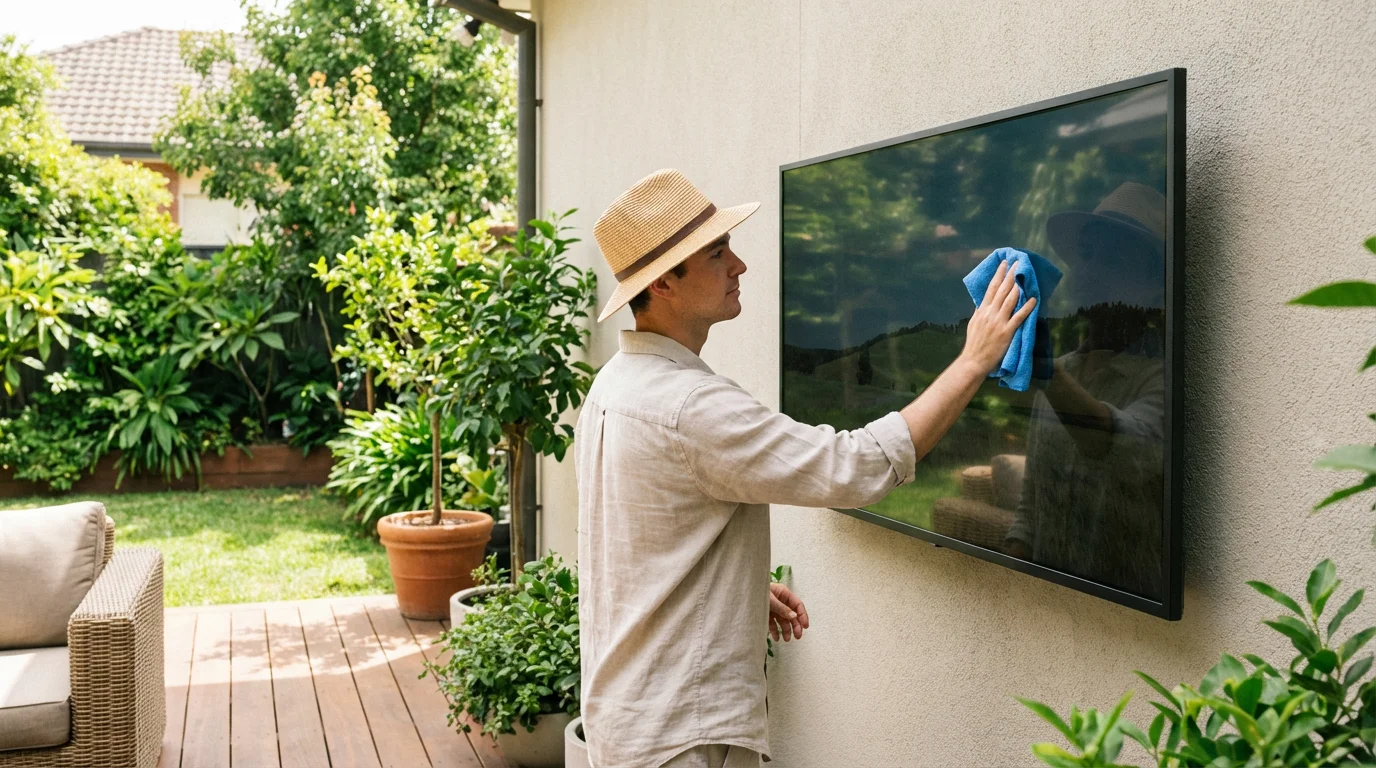
What You Need
- Microfiber cloth -- lint-free, soft-weave. Two cloths are better: one for cleaning, one for drying.
- Distilled water -- tap water contains minerals that leave white spots when it dries. Distilled water does not.
- Screen-safe cleaner (optional) -- if you need something stronger than water. Look for products labeled specifically for LCD/OLED screens. Avoid anything with alcohol, ammonia, or acetone.
That is genuinely all you need. Most cleaning mistakes happen when people reach for something more aggressive.
Step-by-Step Cleaning Process
Step 1: Turn the TV off and let it cool
A dark screen makes smudges and dust easier to see. Heat also causes cleaning solution to evaporate too quickly, leaving streaks. Give it 10-15 minutes after use before cleaning.
Step 2: Dry wipe first
Use a clean, dry microfiber cloth and gently wipe the screen in one direction -- left to right or top to bottom. This removes loose dust and pollen without pressing particles into the screen surface. Do not use circular motions; they redistribute debris.
Step 3: Dampen for stubborn spots
For stuck-on grime -- bird droppings, insect residue, pollen buildup -- lightly dampen (not soak) a microfiber cloth with distilled water. Wring it out so it is barely moist, then gently press it against the soiled area and hold for a few seconds before wiping. This loosens the residue without requiring pressure.
Step 4: Dry immediately
Follow immediately with a dry microfiber cloth. Do not let water air-dry on the screen -- it leaves mineral deposits even with distilled water if left long enough.
Step 5: Clean the bezel and vents
The frame and rear vents accumulate dust that can work its way into the panel over time. Use a soft brush attachment on a low-suction vacuum, or a can of compressed air, to clear the vents. Wipe the bezel with a lightly dampened cloth.
What Not to Use
| Avoid | Why |
|---|---|
| Paper towels or tissues | Wood-fiber materials are abrasive enough to scratch anti-glare coatings |
| Windex or glass cleaner | Contains ammonia -- dissolves screen coatings over time |
| Isopropyl alcohol (undiluted) | Strips anti-reflective coatings; causes permanent cloudiness |
| Tap water | Mineral content leaves white residue when dry |
| Spray directly on screen | Liquid can seep behind the bezel into electronics even on IP-rated TVs |
| Circular scrubbing motion | Redistributes abrasive particles and can cause micro-scratches |
How Often Should You Clean It?
| Condition | Recommended Frequency |
|---|---|
| Light use, covered patio, low pollen area | Once a month |
| Regular use, open backyard, moderate pollen | Every 2 weeks |
| Coastal location (salt air) or high pollen season | Weekly -- salt residue is corrosive if left on screen edges |
| After a storm or heavy wind event | Inspect and clean immediately |
Seasonal Deep Clean
At the start and end of outdoor TV season (spring and fall), do a more thorough check beyond the screen:
- Inspect mounting hardware -- check bolts and wall anchors for rust or loosening caused by temperature cycles
- Check cable connections -- outdoor conduit seals can crack over winter; look for any exposed cable or moisture ingress points
- Clean the rear vents thoroughly -- a season's worth of debris in the vents restricts airflow and raises operating temperature
- Test weatherproof port covers -- if your TV has port covers (HDMI, USB), make sure they seal properly and show no cracking
For a full off-season storage checklist, see: How to Protect Your Outdoor TV in Winter
Who This Guide Is Not For
- Indoor TVs: the distilled-water-only rule is more conservative than indoor screens require; standard screen cleaner is fine indoors
- Touchscreen or interactive displays: these have different coatings that may require manufacturer-specific cleaning products
The Short Version
Dry microfiber cloth for routine dust. Lightly dampened microfiber with distilled water for stuck-on residue. Dry immediately after. Never spray liquid directly on the screen. Clean monthly at minimum -- more often in high-pollen or coastal environments.
If you are still choosing your outdoor TV, see our guide to what to look for in a backyard outdoor TV before you buy.

0 comments