

Apartment balconies present a different set of constraints than suburban backyards: limited wall space, weight restrictions, HOA rules, smaller viewing distances, and often no option to drill into the building facade. Getting an outdoor TV setup right in this environment requires thinking through the specifics before purchasing anything.
Size: Smaller Is Usually Correct Here
The most common mistake in balcony TV setups is oversizing. If your balcony seating is 6 to 10 feet from the wall, a 55-inch screen is at the upper limit of comfortable viewing — and a 65-inch will feel overwhelming at close range. For most urban balconies where seating is 5 to 8 feet away, 43 to 50 inches is the right range.
Smaller screens are also meaningfully lighter. A 43-inch outdoor TV typically weighs 25 to 35 lbs; a 65-inch weighs 65 to 90 lbs. On a balcony where your mounting options are limited, the lighter panel gives you more flexibility.
Mounting Options Without Drilling Into the Building
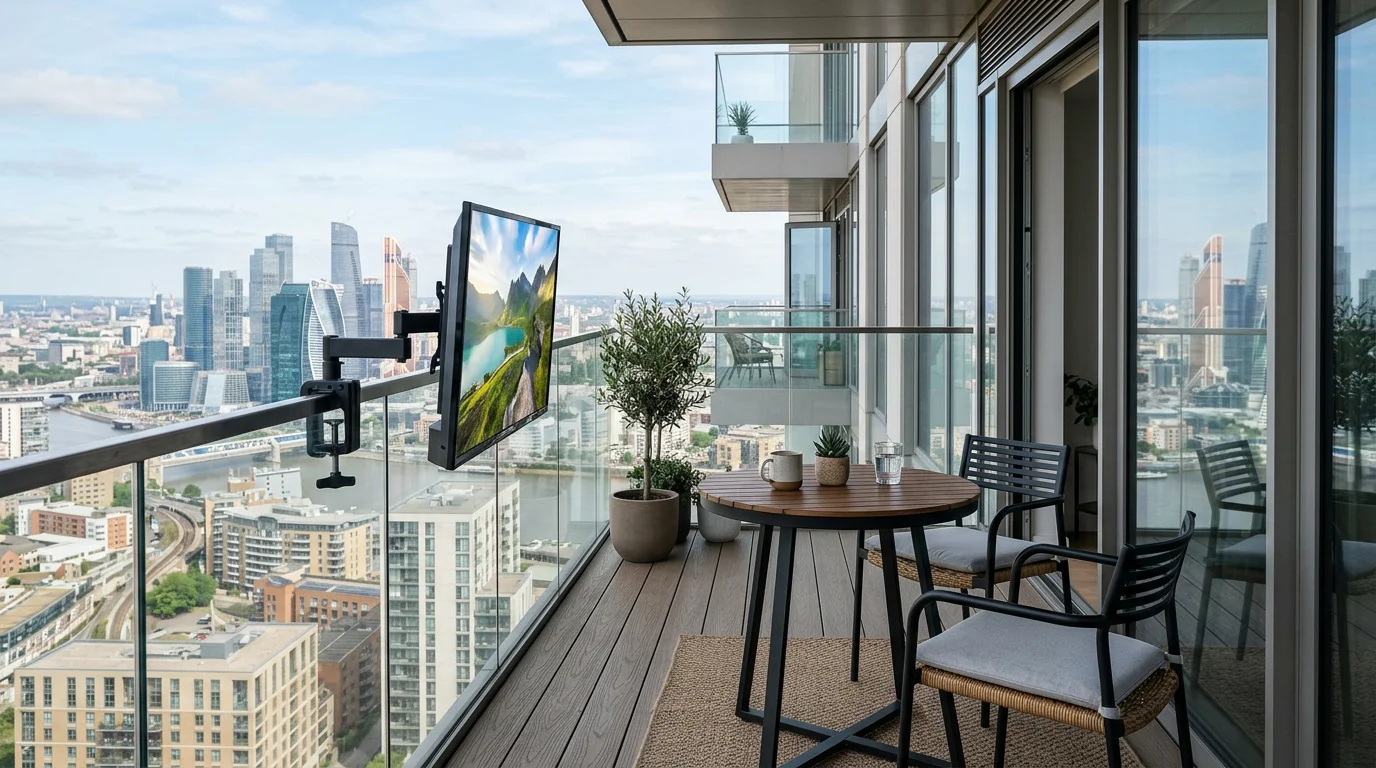
If your lease or HOA prohibits drilling into the exterior wall — which is the default in most apartment buildings — you have two realistic mounting approaches:
Railing mount: Clamps directly onto a standard balcony railing (round or square tube). No drilling required. These mounts hold TVs up to 55 inches and 80 lbs on most designs. Confirm your railing diameter matches the mount's clamp range before purchasing. Railing mounts position the TV above the railing height, which can create a slightly high viewing angle — tilt-adjustable models compensate for this.
Freestanding floor stand: A weighted base stand that sits on the balcony floor. Fully portable, no installation required, and works on any flat surface. The trade-off is footprint — a floor stand for a 50-inch TV typically occupies a 24" x 24" base area, which matters on a small balcony. Some models include wheels for easy repositioning.
Both options allow you to bring the TV inside during extended periods of bad weather or when you move out — an important consideration for renters.
HOA and Building Rules: What to Check
Before purchasing, confirm three things with your building management or HOA:
- Is permanent mounting allowed? Many buildings prohibit drilling into the exterior facade but permit clamp or railing-based mounting.
- Are there aesthetic restrictions? Some HOAs restrict visible electronics on balconies visible from the street or common areas.
- Is there a size or weight limit? Balcony load ratings vary. Most modern concrete balconies handle the weight of any residential TV without concern, but older buildings with wooden balconies may have restrictions.
Weather Exposure on Balconies
Urban balconies typically have partial overhead coverage from the floor above — but this varies widely. A fully exposed balcony facing into prevailing winds gets more rain, dust, and UV exposure than a deep covered patio. Minimum recommended specs for a fully exposed urban balcony:
- IP rating: IP55 or higher (dust-tight, protected against water jets from any direction)
- Operating temperature range: Should cover your local winter lows if you plan year-round use
- UV-resistant cabinet materials: Direct sun exposure degrades standard plastics over 2 to 3 years
If your balcony has a roof or overhead cover and faces away from prevailing rain, a shade-rated TV (IP54, 700–1,000 nits) is sufficient and costs less.
Brightness on a Balcony
Balconies above the ground floor often receive direct afternoon sun from the west or south — the same glare conditions as exposed backyard installations, just in a smaller space. 1,000 nits is the practical minimum for partial-sun balcony use; 1,500 nits gives comfortable headroom for most urban orientations (source: RTINGS.com outdoor TV testing, March 2026).
If your balcony faces north or is shaded by the building opposite, 700 to 900 nits is workable for most viewing conditions.
Power Access
Most apartment balconies have at least one outdoor GFCI outlet. If yours does not, a licensed electrician can add one — this is a standard job. Running an extension cord from an interior outlet through a door gap is not a safe long-term solution and voids most TV warranties if damage occurs from the unprotected connection.
Who Should Not Set Up an Outdoor TV on a Balcony
If your balcony is smaller than 40 square feet, a fixed TV setup will dominate the space and limit how you use it for everything else — dining, plants, seating. In that case, a portable indoor TV moved outside for specific occasions is more practical than a dedicated outdoor installation. Also, if your building explicitly prohibits any balcony electronics visible from the exterior, the HOA risk outweighs the convenience.
For weatherproofing specs explained in plain terms, see Outdoor TV in Rain: What IP Ratings Actually Mean. For mounting options across all installation types, see Outdoor TV Mounting Ideas: 5 Setups That Actually Work.

0 comments