

The names sound similar. The price tags sometimes overlap. But outdoor TVs and indoor TVs are engineered for fundamentally different environments -- and the differences go well beyond a weatherproof casing.
Here is a direct comparison across every spec that actually matters for outdoor use.
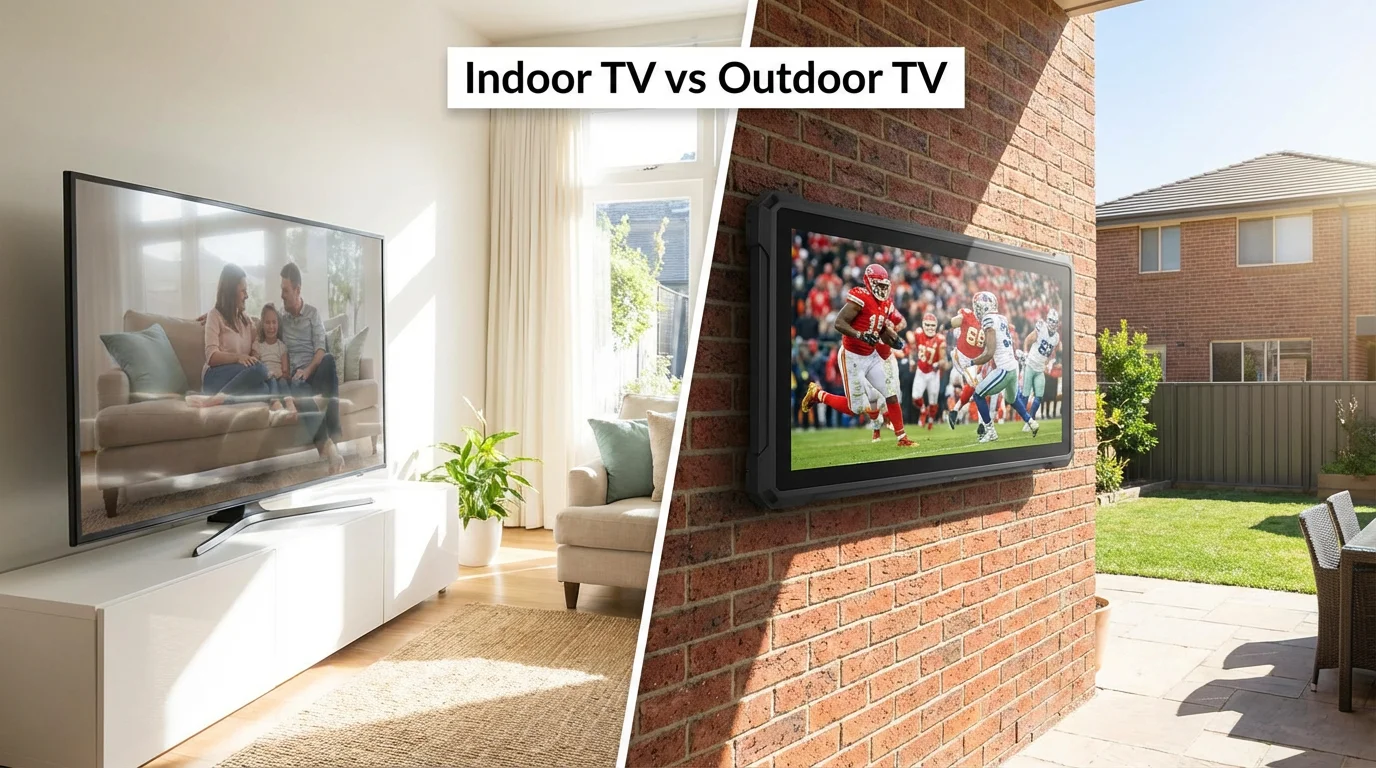
Brightness: The Most Visible Difference
This is where the gap is starkest.
| TV Type | Typical Peak Brightness | Usable in Direct Sun? |
|---|---|---|
| Standard indoor TV | 300-600 nits | No -- image washes out |
| High-end indoor TV (OLED/QD) | 600-1,200 nits | Marginal at best |
| Entry outdoor TV | 700-1,000 nits | Shade only |
| Mid-range outdoor TV | 1,000-1,500 nits | Partial sun |
| High-brightness outdoor TV | 1,500-2,500+ nits | Yes, including direct sun |
Source: tvsbook.com brightness testing classifications, Apr 2026
Outdoor TVs also use anti-glare screen treatments that reduce reflections from sunlight hitting the panel face-on. Indoor screens are optimized for controlled lighting -- they have no meaningful anti-glare capability outdoors.
For more on what nits rating you actually need, see: How Many Nits Does an Outdoor TV Need?
Weatherproofing: Built In, Not Bolted On
Outdoor TVs are sealed from the factory. The key specs:
- IP rating: an IP55-rated TV resists dust ingress and directional water jets. Indoor TVs have no IP rating -- they are not sealed at all.
- Corrosion-resistant materials: outdoor TV housings use powder-coated aluminum or UV-stabilized plastics that resist oxidation. Standard TV bezels are ABS plastic that cracks and fades in sunlight within a season.
- Sealed port covers: HDMI and USB ports on outdoor TVs have rubber gasket covers to prevent moisture entry. Indoor TVs leave ports open.
Taking an indoor TV outside -- even under a cover -- exposes it to condensation cycles that corrode internal circuits within months.
Temperature Range: Engineering for Extremes
| Spec | Typical Indoor TV | Typical Outdoor TV |
|---|---|---|
| Operating temp range | 50F-95F (10C-35C) | -22F-122F (-30C-50C) |
| Storage temp range | 14F-140F | -40F-140F+ |
| Active cooling | Passive only | Often includes temperature-controlled fans |
| Cold-start protection | None | Heater circuits in some models |
An indoor TV left in a garage during a cold winter can suffer LCD panel damage from temperatures below its rated range. An outdoor TV rated to -22F handles year-round installation without removal.
Screen Coating and UV Resistance
Prolonged UV exposure degrades both the screen surface and internal components:
- Indoor TV screens: no UV protection. Direct sun fades anti-reflective coatings within months and can permanently damage the LCD layer.
- Outdoor TV screens: UV-stabilized glass or acrylic front panels that resist yellowing and coating breakdown. Internal components use UV-resistant materials throughout.
Audio: Designed for Open Air
Indoor TVs are tuned for enclosed rooms where sound bounces off walls and ceilings. Outside, that acoustic environment disappears.
- Indoor TV speakers: typically 10-20W, forward or downward-firing, tuned for room acoustics
- Outdoor TV speakers: typically 20-40W, wider dispersion pattern, tuned for open-air listening where sound dissipates rapidly
The difference is audible. Dialogue on an indoor TV used outdoors often becomes hard to follow during gatherings -- background noise overwhelms the speaker output.
Lifespan: The Long-Term Math
A quality outdoor TV installed correctly lasts 7-10 years in typical residential use (source: tvsbook.com, Apr 2026). An indoor TV placed outside, even with a protective cover, rarely survives more than 1-2 seasons before showing signs of moisture damage, panel degradation, or component failure.
The price premium for a purpose-built outdoor TV -- typically $400-800 more than a comparable indoor model -- pays for itself in the first replacement cycle you avoid.
When an Indoor TV Outside Might Be Acceptable
There are narrow situations where a standard TV can work outdoors short-term:
- A fully enclosed, climate-controlled outdoor room with no direct sun or moisture exposure
- Temporary seasonal use with a high-quality weatherproof enclosure (not just a cover)
- A covered space where the TV is never exposed to rain, condensation, or temperatures outside its rated range
In these cases, the TV still lacks outdoor brightness -- you will deal with glare -- but it may survive longer than an exposed installation.
Who This Comparison Is Not For
- Commercial installs: commercial-grade displays have different brightness and durability specs again -- this comparison covers residential use only
- Projector setups: if you're comparing TV vs projector for outdoors, see our guide: Outdoor TV vs. Projector: Which Is Right for Your Backyard?
Bottom Line
Outdoor TVs cost more because they solve real engineering problems -- brightness, sealing, temperature tolerance, UV resistance -- that indoor TVs are not built to handle. If your TV will live outdoors for more than one season, the purpose-built option is the practical choice, not a luxury.
If you are ready to choose a specific model, see our backyard outdoor TV buying guide for what specs to prioritize for your setup.

0 comments