

A poolside TV is one of the more demanding outdoor TV installs you can do. It combines the brightness challenge of open-sky sun exposure with the moisture challenge of water spray, splashing, and elevated humidity — plus electrical safety requirements that most buying guides skip entirely.
This guide covers what actually matters for a pool area install: which specs are non-negotiable, what the electrical code requires, how to position the TV for the best experience, and where current options fit. It's written for homeowners planning a permanent residential installation.
Why Pool Installs Are Harder Than Standard Outdoor TV Setups
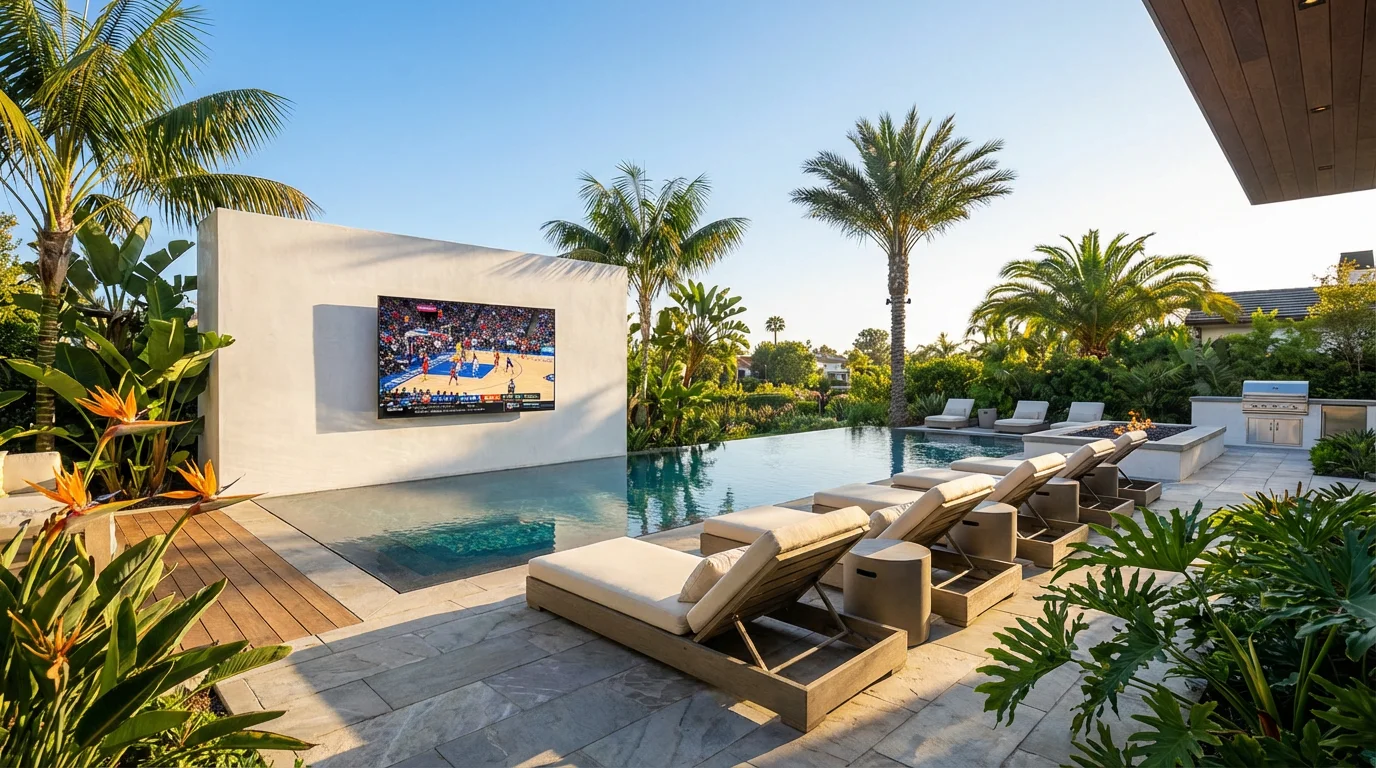
Most outdoor TV installations deal with one primary challenge: sun or weather. Pool area installs deal with both simultaneously, plus three additional factors that don't apply to patio or porch setups:
- Reflected light from water. Pool surfaces act as mirrors, bouncing sunlight upward onto the TV screen from below. This compounds the ambient light challenge significantly — the effective brightness requirement for a poolside install is typically one tier higher than a non-pool setup in the same sun exposure category. A south-facing patio without a pool might manage at 1,500 nits; the same wall with a pool in front of it needs 2,000 nits for equivalent daytime watchability.
- Splash and spray exposure. A TV mounted near an active pool receives intermittent direct water contact — not just rain, but splash, spray from swimmers, and water features. IP55 (water jets from any direction) is the baseline; IP56, which adds resistance to higher-pressure jets, is preferable for installs within 8–10 feet of the pool edge. IP54 (splash-only) is insufficient for most pool situations.
- Electrical code requirements. Pools are governed by specific National Electrical Code (NEC) sections that dictate where outlets and permanently mounted electrical equipment can be placed relative to pool water. These aren't optional guidelines — they're enforceable code requirements that affect where your TV can legally be mounted and where it must be powered from.
Electrical Safety and Code Requirements
Before choosing a TV or a mounting location, understand the electrical constraints. Under NEC Article 680 (the section governing swimming pools and spas):
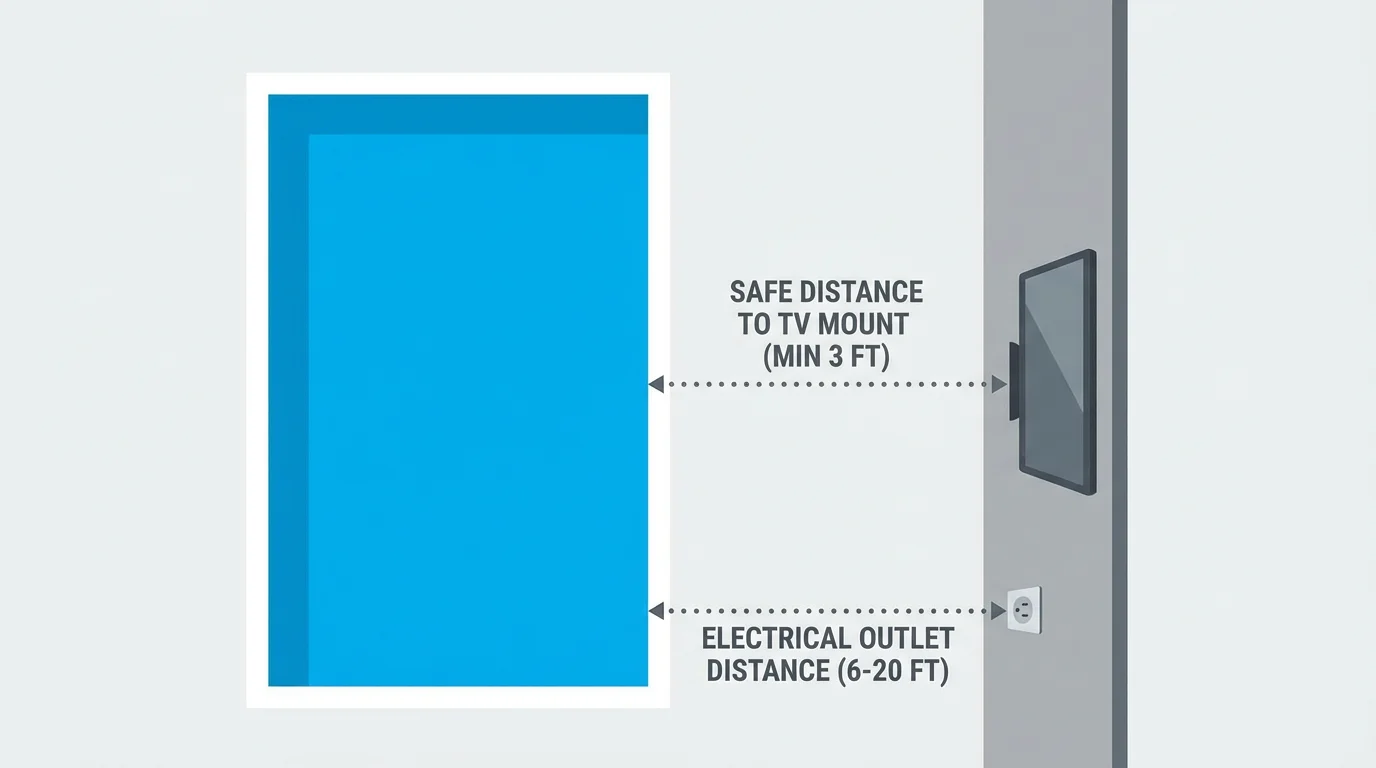
- GFCI-protected outlets must be located between 6 and 20 feet from the pool edge for in-ground pools. Any outlet powering a poolside TV must be GFCI protected.
- Permanently mounted electrical equipment — which includes a wall-mounted TV — must maintain appropriate clearances from the pool water. Consult your local building department for the specific requirements in your jurisdiction, as local codes can be more restrictive than the NEC baseline.
- Low-voltage fixtures within 5 feet of the pool must be at a minimum height above the water level — the exact requirement varies by fixture type.
In practice, this means most pool TV installs work best when the TV is mounted on a wall that's at least 6–10 feet from the pool edge, powered by a GFCI outlet installed within the 6–20 foot range. If you're unsure whether your planned install meets code, an electrician familiar with pool electrical work can verify before you commit to a mounting location.
Brightness Requirements for Pool Areas
Pool areas are almost always full-sun or near-full-sun environments. Even if the TV wall is partially shaded, water reflection from the pool surface amplifies ambient light significantly.
According to spencerstv.com's February 2026 outdoor TV buying guide: "Poolside entertainment or fully exposed decks need 2,000+ nit screens to combat direct sunlight." That's consistent with what we've seen from installer experience and user reports — a 1,500-nit TV that performs well on an open patio can look noticeably washed out at the same location once pool reflection is added to the equation.
Practical brightness guidance for pool installs:
| Pool setup | Recommended nits | Notes |
|---|---|---|
| Covered pool enclosure, minimal reflected light | 1,000–1,500 nits | Solid roof blocks direct sun; reflection still present but manageable |
| Open pool, TV on shaded wall, afternoon shade | 1,500 nits | Pool reflection adds ~1 tier of brightness demand vs. non-pool setup |
| Open pool, TV wall in direct afternoon sun | 2,000 nits | Direct sun + reflection — this is the most demanding residential scenario |
IP Rating: What You Actually Need at Poolside
IP55 is the baseline outdoor TV standard — certified against water jets from any direction. For most pool installs, this is adequate if the TV is mounted 8+ feet from the pool edge and isn't in the direct splash zone of water features or frequent cannonball territory.
IP56 (higher-pressure water jet resistance) is worth the upgrade if:
- The TV is within 6–8 feet of the pool edge
- Your pool has water features (jets, waterfalls) that spray toward the TV wall
- Children use the pool frequently and splash patterns are unpredictable
IP65 (complete dust-tight + water jet protection) exists in commercial outdoor display products but is rare in residential outdoor TVs at 55". IP54 — which appears on some budget outdoor TVs — is splash protection only and is not recommended for pool areas.
Positioning for the Best Viewing Experience
Beyond code and specs, mounting position significantly affects the viewing experience:
- Height. Mount the TV so the center of the screen is approximately at seated eye level from the primary viewing position — typically 42–48 inches from the deck surface when viewers are on lounge chairs. Higher mounts cause neck strain during extended viewing.
- Angle. Tilt the screen slightly downward (5–10°) to minimize reflected sunlight hitting the screen surface directly. A full-motion mount gives you flexibility to adjust seasonally as sun angle changes.
- Distance from pool edge. Positioning the TV so viewers look at it from inside the pool or from pool-edge seating works best when the screen is 10–16 feet from the primary viewing position. Closer than 8 feet feels cramped; further than 20 feet on a 55" screen requires post-sunset viewing to be comfortable.
- Avoid direct sun reflection. If possible, orient the TV so direct sunlight doesn't hit the screen face-on during peak viewing hours. A wall that faces east (morning sun, afternoon shade) is significantly more watchable in the afternoon than a west-facing wall.
What to Look for in a Pool-Area TV in 2026
Combining all the above into a practical checklist:
- Brightness: 1,500 nits minimum for covered or shaded pool areas; 2,000 nits for open, direct-sun exposure
- IP rating: IP55 minimum; IP56 preferred within 8 feet of pool edge or near water features
- Operating temperature: 122°F ceiling minimum for summer pool use; check the low end for year-round northern installs
- Mount type: Full-motion recommended for seasonal sun angle adjustment
- GFCI power: Required by code; verify your electrician installs an appropriate outdoor-rated GFCI outlet
- Audio: Open outdoor spaces disperse sound quickly — an outdoor soundbar or in-ceiling speakers are worth budgeting for alongside the TV
Current Options Worth Considering (April 2026)
The 55-inch pool TV market in 2026 has two realistic tiers for genuine outdoor pool use:
For covered or shaded pool areas (1,500 nits): The ByteFree 55" Outdoor TV at $1,599 covers this scenario — 1,500 nits, IP55, Dolby Vision, HDMI 2.1. If your pool wall gets afternoon shade and you're not dealing with high-angle direct sun, 1,500 nits is adequate and this sits at the lower end of the price range for this spec level.
For open, direct-sun pool areas (2,000 nits): The Sylvox Pool Pro 2.0+ at ~$2,399 is specifically designed for this scenario — 2,000 nits and IP56, the higher water resistance rating. The price premium is justified for installs where both full-sun brightness and splash proximity are real factors. If only one applies, the 1,500-nit tier is worth reconsidering.
For a full side-by-side comparison of outdoor TV options at 55", see the 2026 comparison guide.
Summary
- Pool area installs need at least one brightness tier higher than the same sun exposure without a pool — water reflection compounds ambient light significantly
- IP55 is the minimum; IP56 is preferred for installs within 8 feet of the pool edge or near water features
- Electrical code (NEC 680) requires GFCI protection and governs where outlets and permanently mounted equipment can be placed relative to pool water — verify with an electrician before finalizing your mounting location
- Position the TV at seated eye level, tilt slightly downward, and orient away from peak afternoon sun if possible
- Budget for audio separately — open outdoor spaces don't retain sound the way enclosed rooms do
FAQ
Can I mount an outdoor TV directly above the pool?
No — NEC code and basic safety considerations prohibit mounting electrical equipment directly over pool water. Wall-mounted installs on the pool perimeter, set back from the edge, are the standard approach.
Does a poolside TV need a special mount?
It needs an outdoor-rated mount with corrosion-resistant hardware (stainless or galvanized). Standard indoor TV mounts will corrode in pool environments, particularly in areas with chlorinated splash exposure. Full-motion mounts are recommended for flexibility in adjusting viewing angle seasonally.
How far from the pool edge should the TV be mounted?
As a practical guideline, 6 feet is a common minimum clearance from the pool edge for wall-mounted equipment, though local codes may vary. Further is better for both safety and moisture protection. An electrician familiar with NEC 680 can confirm the specific requirement for your install.
Will chlorine or saltwater damage an outdoor TV?
IP ratings test against fresh water. Pool chlorine and especially saltwater environments can accelerate corrosion on exposed metal components over time — even on IP55/IP56 rated units. For saltwater pools, look for brands that specifically test or warrant salt-air resistance, or budget for a replacement cycle of 4–6 years rather than 8–10.

0 comments