

The question comes up constantly in home theater and patio forums: why spend $1,500 on an outdoor TV when you can buy a $400 indoor TV and put it in a weatherproof enclosure? It is a fair question, and the honest answer is more nuanced than most articles admit. Sometimes the enclosure route makes sense. Often it does not.
What a TV Enclosure Actually Is
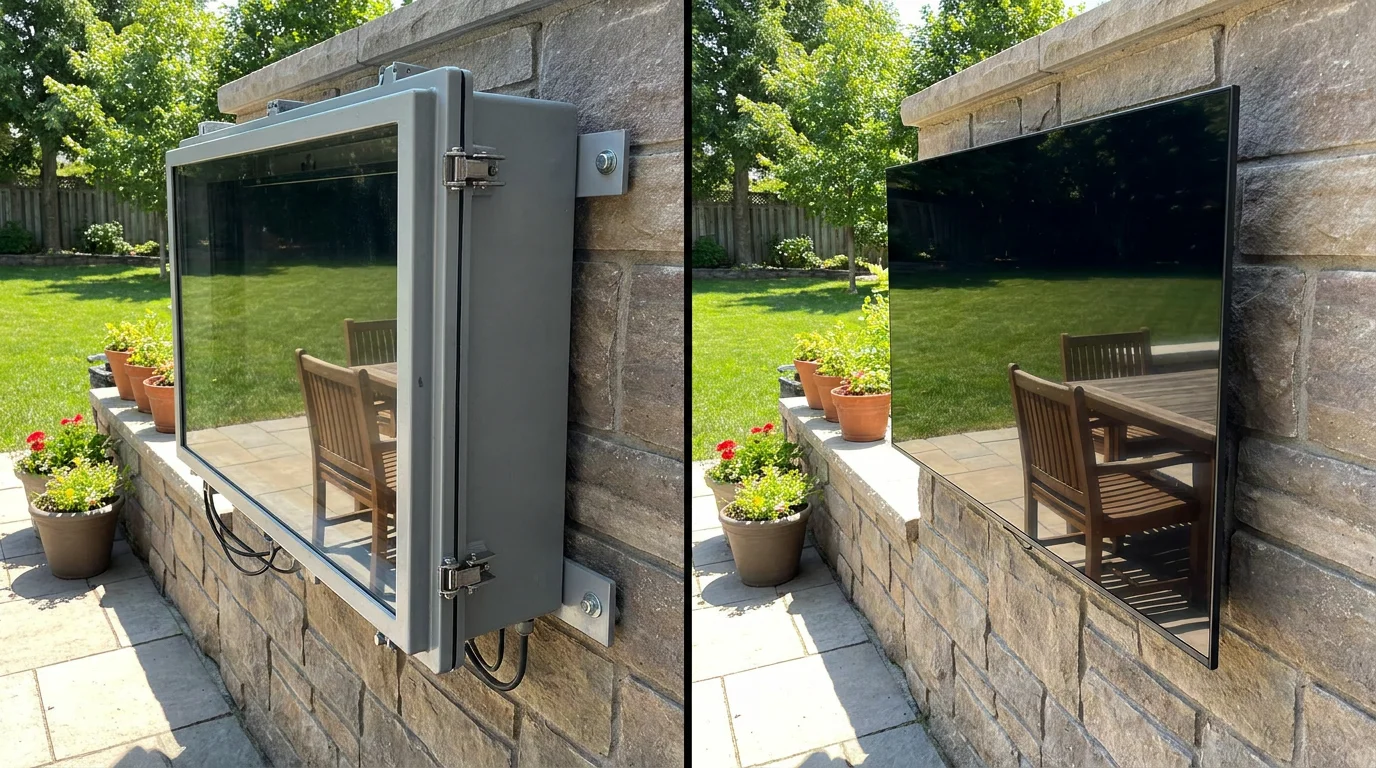
A TV enclosure — also called an outdoor TV cabinet or weatherproof housing — is a vented or sealed box that holds a standard indoor TV and protects it from rain, dust, and UV exposure. Prices range from $200 for basic polycarbonate covers to $1,500+ for climate-controlled stainless enclosures with built-in fans or cooling systems.
The concept is straightforward: protect a cheaper TV with a purpose-built shell. In theory, the combined cost is lower than a dedicated outdoor TV. In practice, several factors complicate this calculation.
The Real Cost Comparison
| Setup | Typical Cost (55") | Notes |
|---|---|---|
| Indoor TV + basic enclosure | $400 + $300 = $700 | Polycarbonate cover, no climate control |
| Indoor TV + quality enclosure | $400 + $800 = $1,200 | Vented aluminum, UV-rated, anti-glare front |
| Indoor TV + climate-controlled enclosure | $500 + $1,500 = $2,000 | Required in climates above 95°F regularly |
| Dedicated outdoor TV (shade-rated) | $900 – $1,400 | 700–1,000 nits, IP54+ |
| Dedicated outdoor TV (partial-sun) | $1,200 – $1,800 | 1,000–1,500 nits, IP55+ |
At the low end, the enclosure route is genuinely cheaper. But the low-end enclosure — a basic polycarbonate cover — has real limitations that close the gap quickly.
What Enclosures Cannot Fix: Brightness
This is the issue most enclosure comparisons skip. A standard indoor TV produces 300 to 500 nits of peak brightness. A quality outdoor TV produces 1,000 to 1,500 nits or more. No enclosure changes what the panel outputs.
Put a 400-nit indoor TV in a weatherproof box and take it outside in partial sun: you get a 400-nit image. Take an outdoor TV with 1,500 nits to the same location: the image remains clear and watchable. This gap is the primary reason dedicated outdoor TVs exist — not weatherproofing, which enclosures do handle, but brightness (source: RTINGS.com outdoor TV testing methodology, March 2026).
If your outdoor TV location is shaded at all times — a fully covered porch with no direct sun — an indoor TV in an enclosure can produce an acceptable image. As soon as any ambient daylight reaches the viewing environment, the brightness difference becomes obvious.
Heat Buildup Inside Enclosures
Indoor TVs are not engineered for enclosed high-temperature environments. A sealed or poorly vented enclosure in summer sun can reach internal temperatures of 120–140°F — well above the 104°F (40°C) maximum operating temperature that most consumer TV manufacturers specify (source: Samsung TV environmental spec sheet). Sustained operation above this threshold shortens panel and component life significantly.
Quality enclosures address this with vented designs, fans, or active cooling — which is why the price escalates quickly. A $300 polycarbonate cover in a hot climate is not a durable solution.
Practical Drawbacks of Enclosures
- Size and aesthetics: Enclosures are significantly bulkier than the TV inside them. A 55-inch TV in a vented aluminum enclosure can add 6 to 10 inches of depth and 4 to 8 inches on each side. Many homeowners find the result visually unappealing compared to a sleek outdoor TV panel (source: Reddit r/hometheater, April 2026).
- Remote control interference: Some enclosures block infrared signals, requiring a remote extender kit or switching to a Bluetooth/RF remote.
- Condensation: In humid climates, temperature cycling between day and night causes condensation inside improperly sealed enclosures. Over time this damages the TV's internal electronics.
- Warranty void: Using an indoor TV outdoors — with or without an enclosure — typically voids the manufacturer's warranty.
When the Enclosure Route Makes Sense
There is a specific scenario where an enclosure is the right call: a fully covered, shaded outdoor space in a mild climate (rarely above 90°F, rarely below 32°F), where the TV will not face any direct sun and ambient light is low. A covered garage bar, a fully enclosed screened porch, or a deep covered patio on a north-facing wall. In these conditions, an indoor TV in a quality enclosure works well, and the cost savings are real.
Who Should Buy a Dedicated Outdoor TV Instead
If your installation involves any of the following, a dedicated outdoor TV is the more reliable choice:
- Any exposure to direct or indirect sunlight during viewing hours
- Climates with regular temperatures above 90°F or below 32°F
- High humidity environments (coastal, subtropical)
- A location where you want a clean, permanent aesthetic
- A setup you expect to use for more than 3 to 4 years without replacing components
For brightness guidance by installation type, see How Many Nits Does an Outdoor TV Need. For a full weatherproofing spec breakdown, see Outdoor TV in Rain: What IP Ratings Actually Mean.

0 comments