

Installing an outdoor TV in Florida, Texas, Arizona, or any climate with regular summer temperatures above 95°F introduces challenges that buyers in milder climates do not face. Heat and UV are the two primary failure modes for outdoor electronics — and they operate differently from rain and cold. This article covers what to look for, what to avoid, and what actually fails first.
The Temperature Problem: Operating Range vs. Storage Range
Every outdoor TV has two temperature specifications: operating range and storage range. The operating range is what matters for hot climates — it defines the ambient temperature at which the TV can run without thermal damage. Most consumer outdoor TVs specify an upper operating limit of 104°F to 122°F (40°C to 50°C) depending on the model (source: Samsung TV environmental specification, 2026).
In Phoenix in July, ambient shade temperatures regularly reach 110°F. A TV rated to 104°F operating maximum, mounted in direct afternoon sun on a south-facing wall, will exceed its thermal limit on a routine summer afternoon — not from a freak heat event, but from a typical Tuesday.
Before purchasing for a hot climate, confirm the operating temperature maximum in the manufacturer's spec sheet, not just the marketing copy. "Designed for outdoor use" does not automatically mean "rated for 110°F operation."
UV Degradation: The Slow Failure Mode
UV exposure degrades three components over time: the screen coating, the plastic cabinet materials, and the rubber seals on ports and bezels. In high-UV climates — particularly at altitude (Denver, Albuquerque, Santa Fe) or in desert environments with low atmospheric UV filtration — this degradation happens faster than in coastal or northern climates.
Signs of UV damage: yellowing or hazing of the screen coating (visible as reduced contrast), brittleness and cracking in the bezel or rear cabinet, and seal degradation that allows moisture ingress during monsoon season.
Quality outdoor TVs use UV-stabilized polycarbonate or metal cabinets and tempered glass with AR coating — these materials resist UV degradation significantly better than standard ABS plastics. Check the spec sheet for "UV-resistant materials" or "tempered glass" — if neither is mentioned, assume standard materials.
What Actually Fails First in Hot Climates
Based on field reports from outdoor AV installers in hot-climate states, the most common failure sequence is:
- Screen coating degradation (2–4 years without shade, 5–8 years with shade)
- Backlight dimming — LEDs produce less output as junction temperature rises; sustained high-temperature operation accelerates permanent brightness reduction
- Smart platform instability — the SoC (system-on-chip) running the TV's operating system is sensitive to sustained heat; random reboots and app crashes increase in high-temperature environments
- Capacitor failure on the power board — electrolytic capacitors age faster at high temperatures, eventually causing the TV to fail to power on
Shade is the single most effective mitigation for all four failure modes. A TV that runs at 85°F under a pergola in Phoenix will outlast a TV running at 110°F in full sun by a factor of two to three in component lifespan.
Recommended Specs for Hot Climates
- Operating temperature maximum: 122°F (50°C) or higher
- Cabinet material: Powder-coated aluminum or UV-stabilized polycarbonate — not standard ABS plastic
- Screen: Tempered glass with AR (anti-reflective) coating
- IP rating: IP55 minimum — monsoon season in the Southwest brings intense rain events
- Brightness: 1,500+ nits — high-UV environments make ambient light management harder, and you need headroom
Installation Tips Specific to Hot Climates
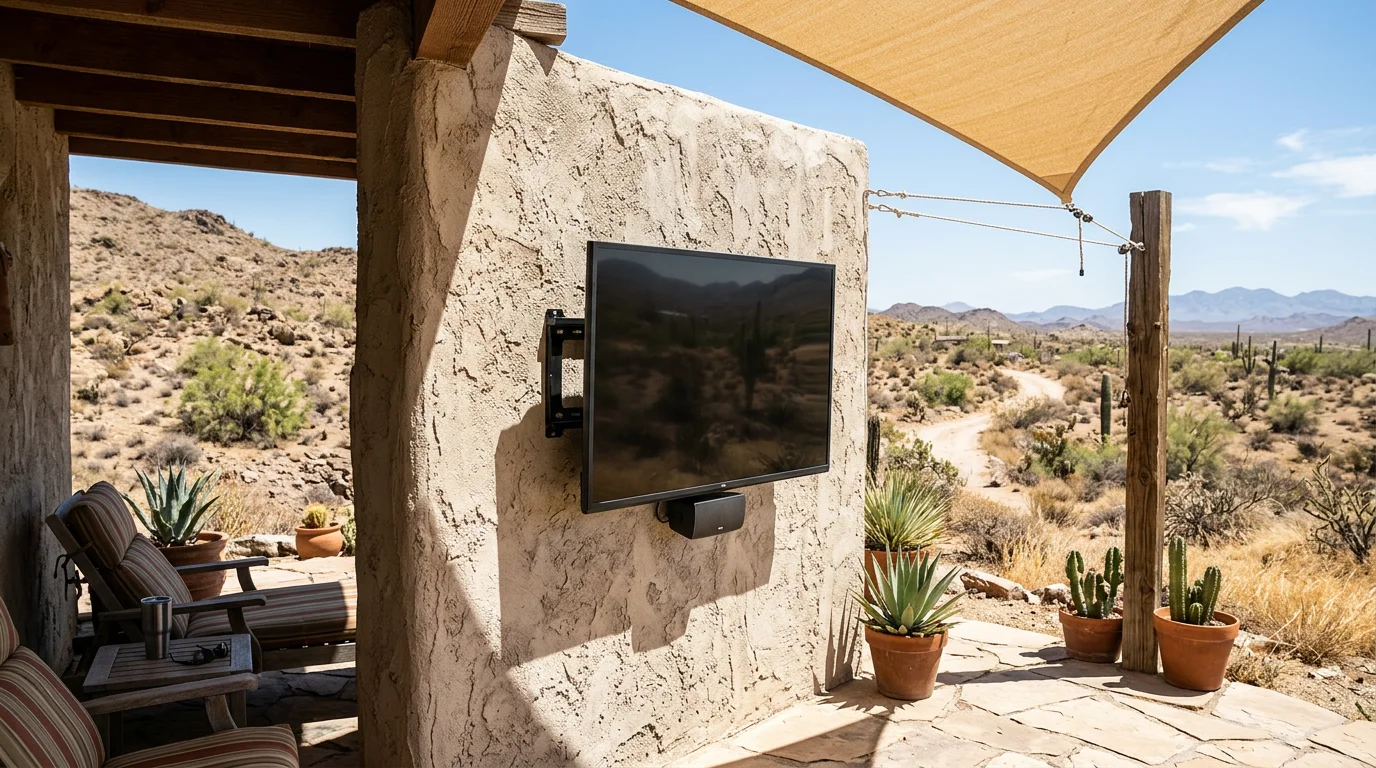
Orientation matters more here than anywhere else. A south or west-facing wall in Phoenix receives 6 to 8 hours of direct sun daily in summer. A north or east-facing wall receives 1 to 2 hours at most. This single decision affects operating temperature, UV exposure, glare, and component lifespan simultaneously. If you have a choice of wall, choose north or east.
Add shade even if it seems unnecessary. A pergola, shade sail, or extended eave that keeps direct sun off the TV face during peak hours (10am to 4pm) meaningfully reduces operating temperature. Even 20% shade coverage makes a measurable difference over years of use.
Use a TV cover when the TV is off for extended periods. During summer vacation or multi-week absences, a UV-rated TV cover prevents accumulated UV exposure on the screen coating and reduces thermal cycling stress on seals and plastics.
What About Enclosures with Climate Control?
Climate-controlled enclosures — boxes with active cooling fans or small air conditioning units — are used in commercial installations in hot climates (outdoor sports bars, hotel pool areas). For residential use, they are expensive ($1,200–$2,500 for the enclosure alone), require periodic maintenance, and add significant bulk. A dedicated outdoor TV rated for the temperature range of your climate is almost always the better residential solution unless you specifically need to use a high-end indoor display (a reference monitor, a commercial display) in an outdoor environment.
Who Should Be Most Careful
Buyers in Arizona, Nevada, inland California, and South Texas are in the highest-risk category for heat-related outdoor TV failure. Buyers in Florida face a different challenge: high humidity and intense UV in combination with temperatures that are hot but rarely exceed 100°F — the moisture-sealing specs matter as much as the temperature rating there. In both cases, buying a TV at the lower end of the outdoor TV price range and expecting it to perform equivalently to a mid-tier model in a hot climate is a mistake the spec sheet will reveal if you read it carefully.
For weatherproofing ratings explained clearly, see Outdoor TV in Rain: What IP Ratings Actually Mean. For protecting the TV during off-season or winter storage, see How to Protect Your Outdoor TV in Winter.

0 comments